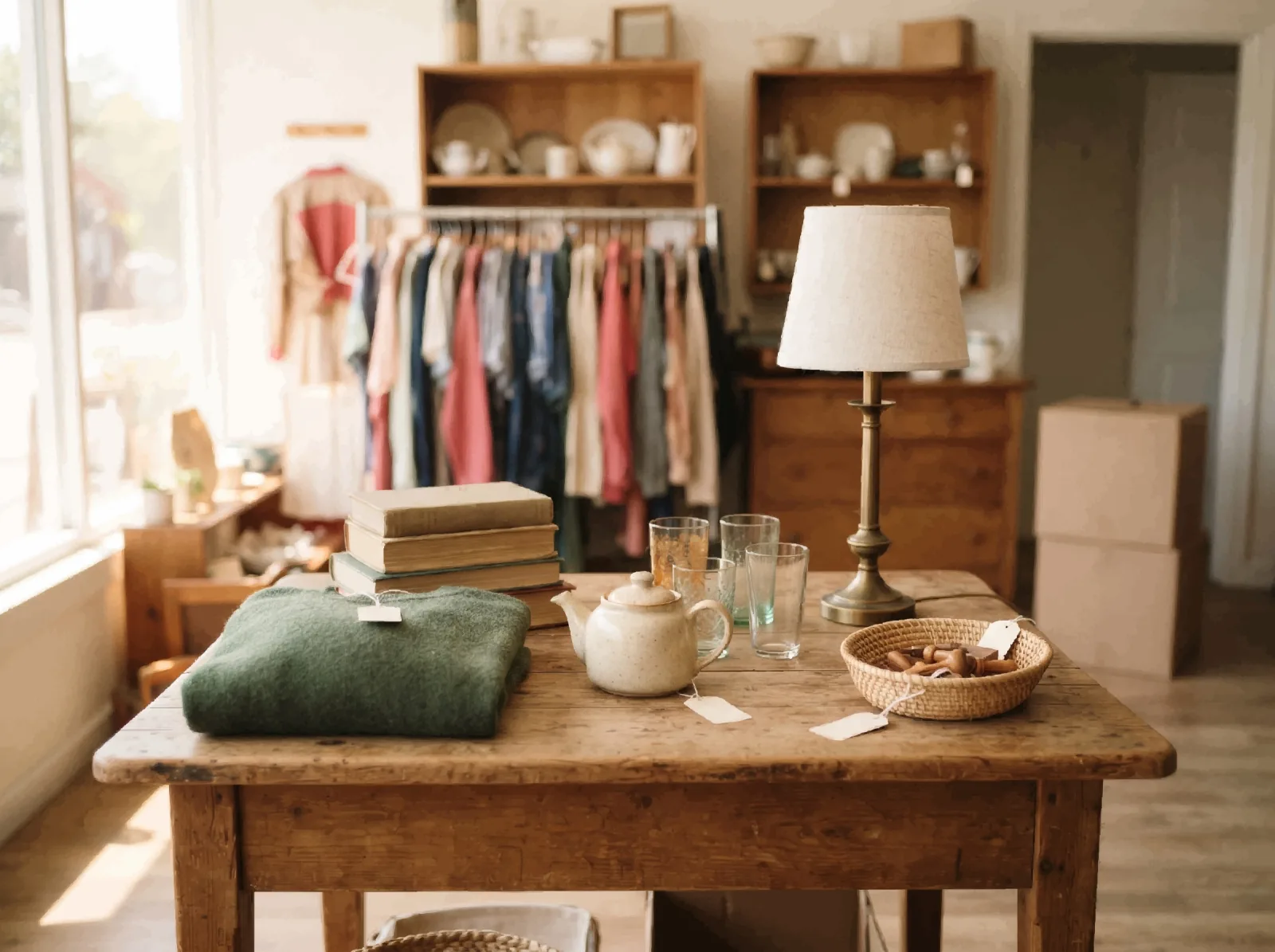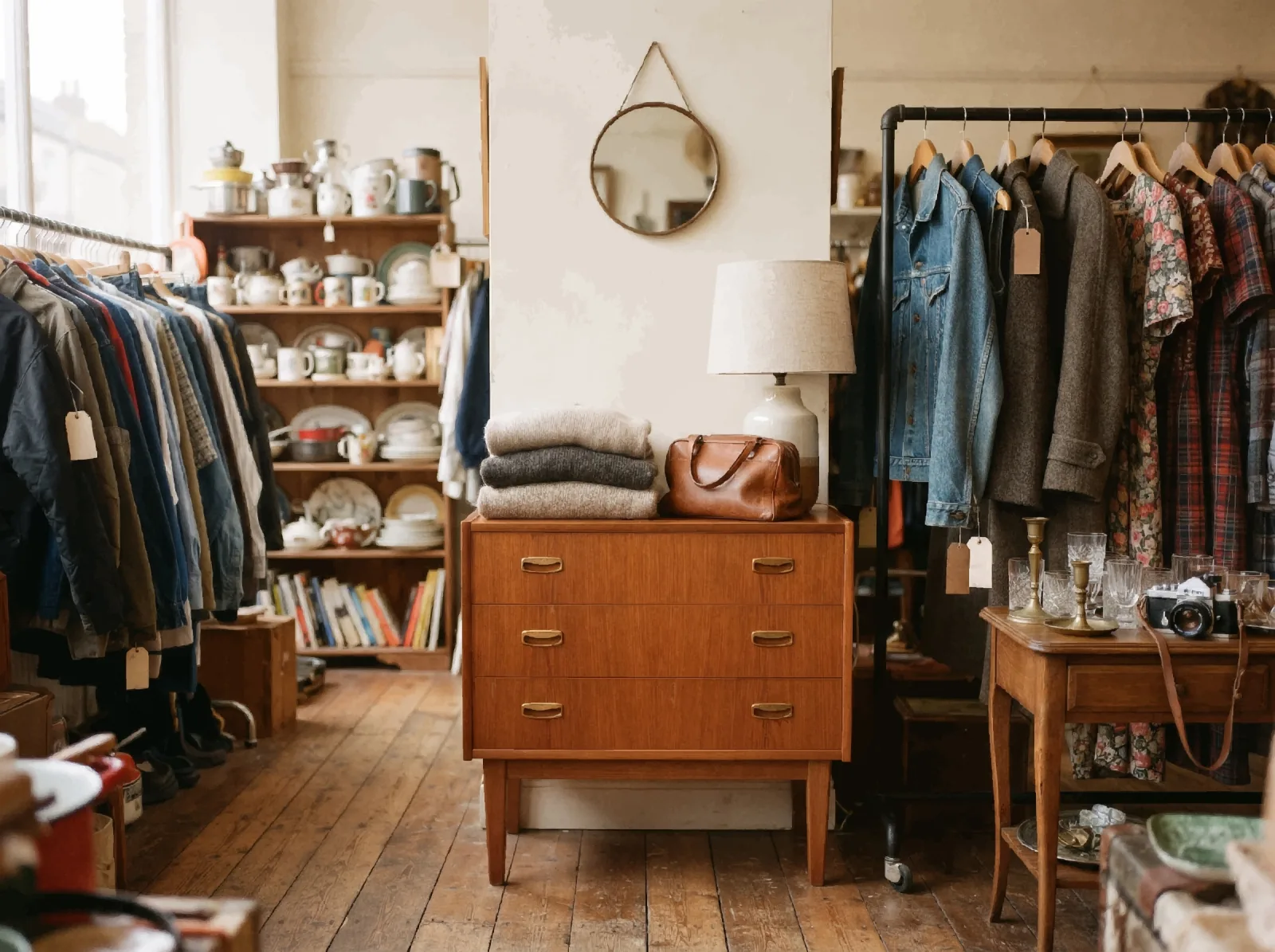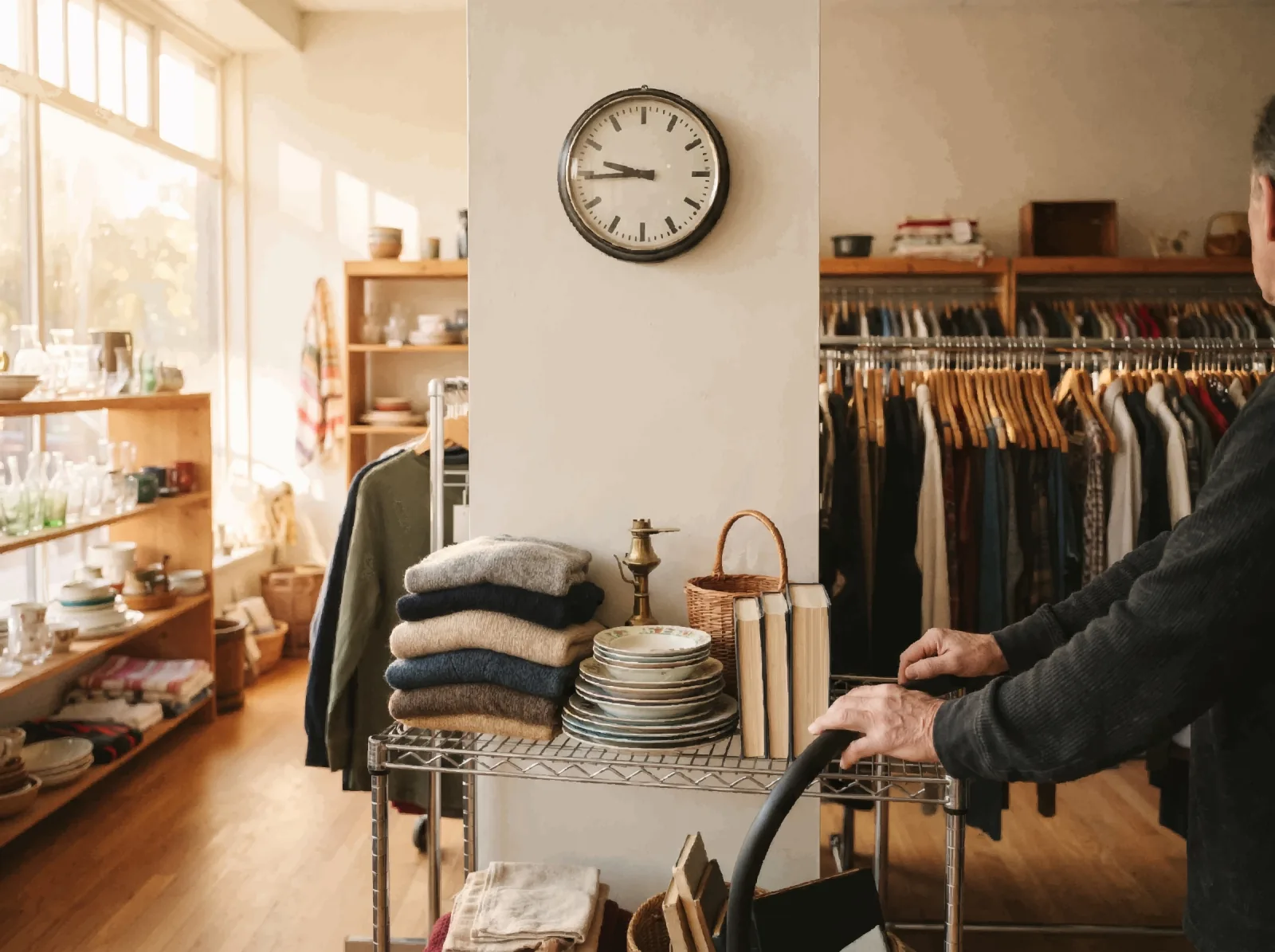
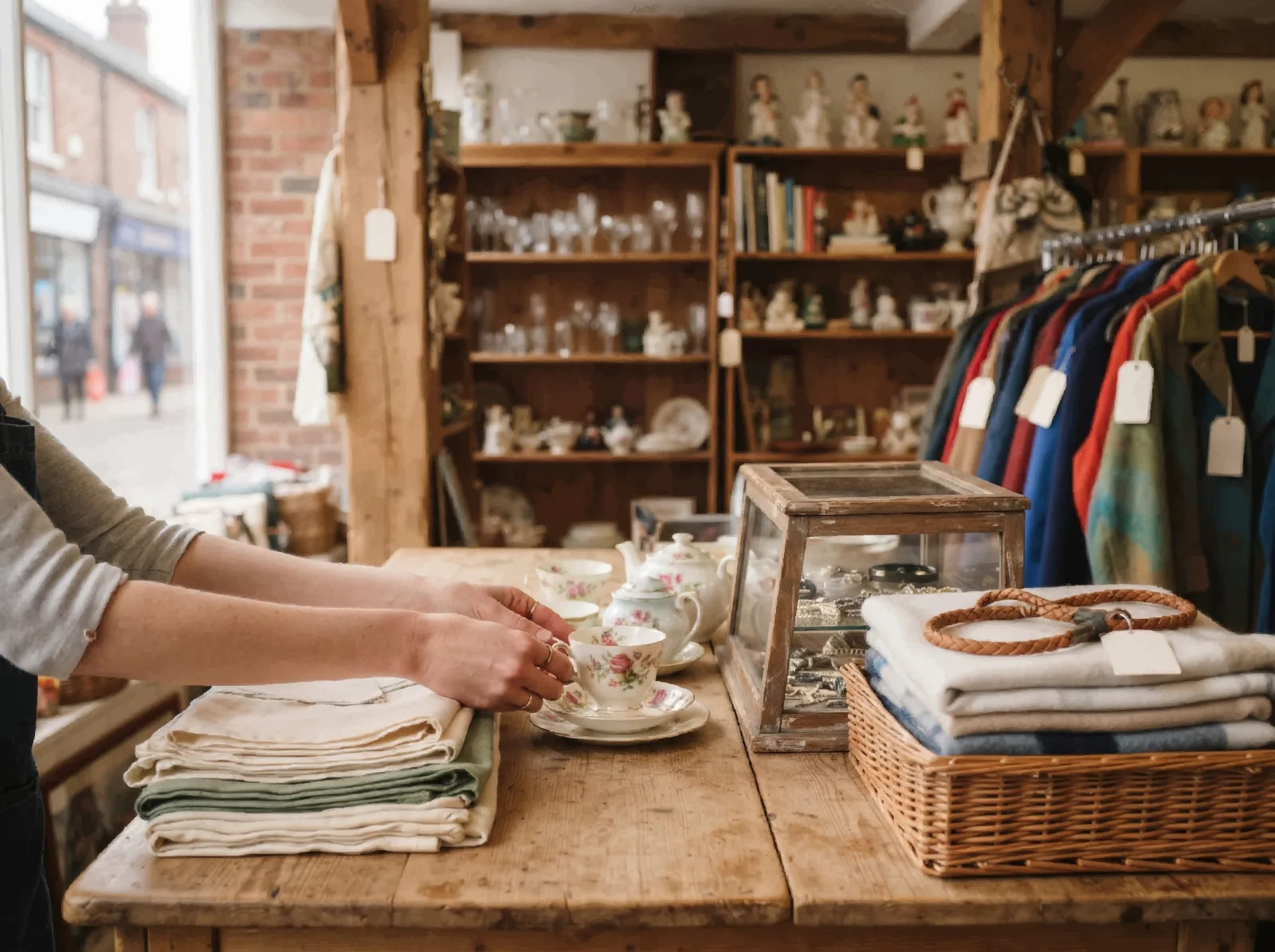
Next to the big names like Goodwill and the Salvation Army, most towns have a few smaller thrift shops run for one local cause: a hospice, a hospital, an animal shelter, a veterans group, a women's shelter. They're easy to drive past, with short hours and a hand-painted sign, but they're often where the lowest prices, the best estate finds and the most local good happen. This guide explains who runs these shops, where your money goes, what they take as donations and how to get the most out of shopping them.
Every one of these shops sets its own rules. Hours, prices, sale days and what they accept vary from store to store and city to city, so use this as a general picture and check with the shop you plan to visit.
What Makes a Cause-Run Thrift Shop Different
A cause-run thrift shop is owned by one charity and exists to raise money for it. That sounds like any charity thrift store, but the size changes a lot about how it works:
- Money stays local: The profit usually goes to one organization in your area, not to a regional office covering many stores.
- Volunteers run the floor: Many of these shops depend on volunteers for sorting, pricing and the register. That keeps costs low, but it also means hours can be short, often three to five days a week.
- Prices are set by hand: Instead of a fixed price for every shirt, volunteers often price each item. That can mean real bargains, and now and then a better piece priced higher to help the cause.
- The donations are local too: Supporters of the cause give to the shop, and older neighborhoods bring in a lot of estate donations: dishes, linens, jewelry, books and furniture from a lifetime at home.
If you want to know how the big chains compare, our guide to Goodwill, the Salvation Army, St. Vincent de Paul and church thrift shops covers them. This article is about the smaller shops that work for a single cause.
Hospice Thrift Stores
Hospice thrift stores are among the most common cause-run shops in the country, and many are surprisingly large. Some hospices run one shop, and others run several across a county.
- Where the money goes: To the hospice itself. Insurance and Medicare pay for much of hospice care, but not everything, so shops often help pay for grief support for families, care for patients who can't pay, music or pet visits, and other comfort care.
- Who works there: Usually a small paid staff plus many volunteers, often people whose families were helped by the hospice.
- What you'll find: Estate donations are common, since families clearing a home often think of the hospice that cared for someone they loved. Expect good housewares, china and glassware, furniture, jewelry, books and clothing in all sizes.
- How they price: Usually moderate, with special pieces (collectible china, solid wood furniture, signed art) sometimes set aside or priced higher. Many have weekly sales or a tag color of the week.
Some hospice shops also take home medical equipment such as walkers, wheelchairs and shower chairs, either to sell or to lend out. Others can't take any medical items at all, so ask before you bring them.
Hospital Auxiliary Shops
Many hospitals have a volunteer auxiliary, a group of community members who raise money for the hospital. Running a thrift shop is one of the oldest ways they do it, and some of these shops have been open for decades.
- Where the money goes: Equipment, patient comfort items, nursing scholarships or a specific hospital project chosen by the auxiliary each year.
- Who works there: Almost entirely volunteers, many of them long-time regulars who know the stock well.
- What you'll find: These shops are often tidy and well sorted, with a reputation for good clothing, linens, kitchenware and holiday decorations.
- Hours: Often limited to weekdays and Saturday mornings, and some close for a week or two in summer or around the holidays.
Humane Society and Animal Shelter Thrift Stores
Animal shelter thrift stores raise money for animal care: food, vet bills, spay and neuter programs and adoptions. Some are run by a local humane society, others by an SPCA, a rescue group or a county shelter's support group. Despite the shared names, local humane societies and SPCAs are usually independent of the national groups with similar names, so the money from your local shop stays with your local shelter.
- Where the money goes: Straight to the shelter or rescue that runs the shop, often covering a real share of its yearly budget.
- Pet supplies: Many take pet items as well as the usual goods, and some send the useful ones straight to the shelter. Unopened food, clean towels and blankets, crates, leashes and toys are the most welcome. Opened food and worn bedding often aren't.
- The extras: Some shops keep a board of adoptable animals, hold adoption events out front or have a resident cat. A few share a building with the shelter itself.
- What you'll find: A general mix of clothing, home goods, books and furniture, plus plenty of animal-themed decor, since supporters often donate their collections.
If you care about animals, these shops are one of the easiest ways to help a local shelter without writing a check: shop there, donate your extra towels, and keep an eye on the adoption board.
Veterans Thrift Stores
"Veterans thrift store" covers several very different setups, so this is the type most worth checking before you shop or donate.
- Run by a veterans group: Some shops are owned and run by a veterans organization or a local post, and the money goes to its own programs, such as help with housing, rides to medical appointments or emergency aid for local veterans.
- Run by a business for a veterans charity: Others are for-profit stores that pay a veterans charity for donated goods, or for the right to use its name. The charity still receives money, but only the share agreed with the business.
- Donation pickup: Some veterans charities run free curbside pickup of clothing and household goods, then sell what they collect to thrift stores. That's a handy way to donate, and it's worth knowing that the pickup and the store may be run by different groups.
None of these setups is a scam. They're just different, and if you want most of your money to reach veterans, a shop run directly by a veterans group does that best. Check the receipt, the donation slip and the store's website for the name of the organization that runs it.
Shelters, Disability Groups and Other Local Causes
Almost any local charity can run a thrift shop, and many do. A few you may come across:
- Domestic violence shelters: Shops raise money for the shelter, and many also give clothing, furniture and household goods free to the people leaving the shelter for a home of their own. Their addresses are kept apart from the shelter's for safety.
- Disability groups: Some local chapters of disability groups, such as The Arc in some areas, run thrift stores that fund their programs and give people with disabilities paid work and job training.
- Pregnancy and family centers: These often focus on baby and children's clothing, gear and maternity wear, and may give items free to families they serve.
- Schools, libraries and community groups: Parent groups, library friends groups and service clubs run shops, sometimes only on certain days or seasons. Library shops are a great stop for cheap books.
- Rescue missions and food banks: Some sell donated goods to fund meals and shelter, and give clothing to people they serve.
The name of the cause usually tells you what the shop needs most. A family center wants baby gear, a shelter wants household basics, and a library wants books.
Donating to a Cause-Run Shop
Small shops have small back rooms, so they're often choosier than the big chains. A quick call or a look at their website saves you a wasted trip.
Usually welcome
- Clean clothing and shoes in good condition
- Kitchenware, dishes, glassware and linens
- Books, games and puzzles with all the pieces
- Holiday decorations, especially before the season
- Jewelry, art and small collectibles
- For animal shelter shops: unopened pet food and clean towels
Call first
- Large furniture (many small shops have no room or truck)
- Electronics and appliances
- Medical equipment, even at a hospice shop
- Children's car seats and cribs (often refused for safety)
- Mattresses and upholstered pieces with stains or wear
- A whole carload at once (ask if they have room)
Bring donations during donation hours, which are often shorter than shopping hours, and never leave bags outside a closed shop. Our guide to how to donate to a thrift store covers sorting, packing and pickup in more detail.
If you itemize your taxes, ask for a receipt at the door. Small shops run by a qualified nonprofit can give one, but many only write it when asked. Our guide to getting a tax receipt for thrift store donations explains what it should say and how to value what you gave.
How to Shop Small Charity Thrift Shops
These shops reward regulars. A few habits help you find the good stuff and get the best prices:
- Check the hours before you go: Short and changing hours are the most common reason people find a small shop closed. Our guide to thrift store hours and the best time to go explains when stock usually reaches the floor.
- Ask about sales: Many run a bag sale, half-price days or a tag color of the week, often at the end of a season to clear space. Our guide to thrift store sale days and color tags covers how they usually work.
- Look in the glass case: Jewelry, watches, silver and small collectibles from estate donations usually sit by the register. Ask to see them.
- Get to know the volunteers: Regulars often know when a big estate donation is coming in or which day new furniture goes out.
- Pay the price on the tag: Haggling is rarely welcome at a charity shop, and every dollar goes to the cause. If something seems overpriced, you can politely ask whether it goes on sale.
- Bring cash: Most take cards now, but a few small shops still prefer cash or have a minimum for card payments.
Estate donations are where these shops shine, and an old piece of china or a signed print can be worth far more than its tag. Our guide on how to tell if a thrift store find is worth something shows what to look for, and the Value Scanner in the ThriftyPickers app can give you a quick idea from a photo before you buy.
How to Tell Who Runs a Shop
If it matters to you where your money goes, a couple of minutes is enough to find out:
- Read the receipt: It should name the organization that runs the store. If the name differs from the charity on the sign, a business may run it on the charity's behalf.
- Read the store's website: A shop run by a charity usually explains the programs it pays for. A business that supports a charity tends to use words like "partners with" or "supports."
- Look up the charity: The IRS Tax Exempt Organization Search shows whether a charity is a registered nonprofit, and larger ones file a public Form 990 showing how they spend their money.
- Just ask: Volunteers at cause-run shops are usually proud to tell you what their shop pays for.
Most towns have at least one of these shops tucked between the bigger stores, and they're worth adding to your regular route. Find thrift stores near you and check their hours and what they have for sale before you head out.