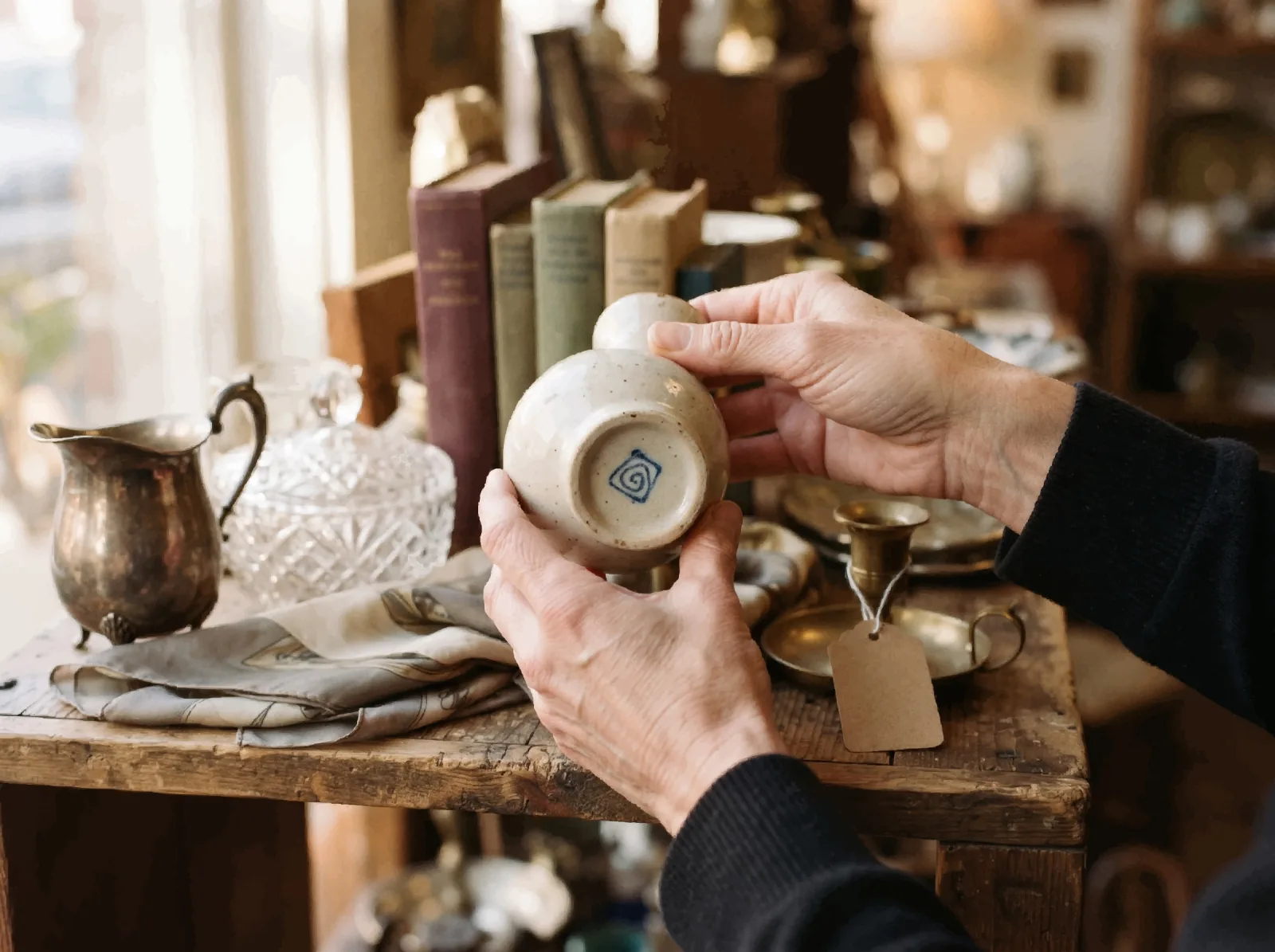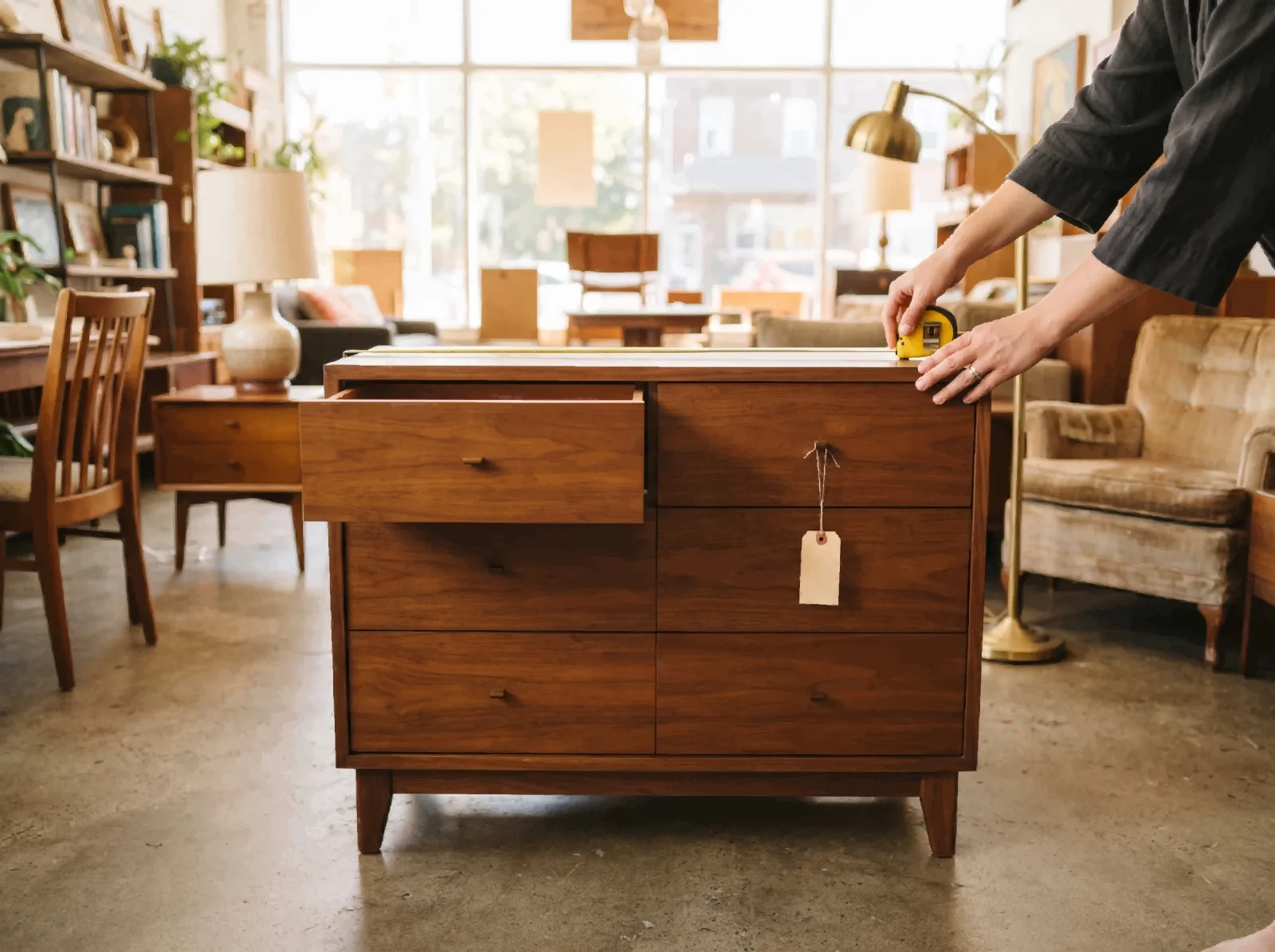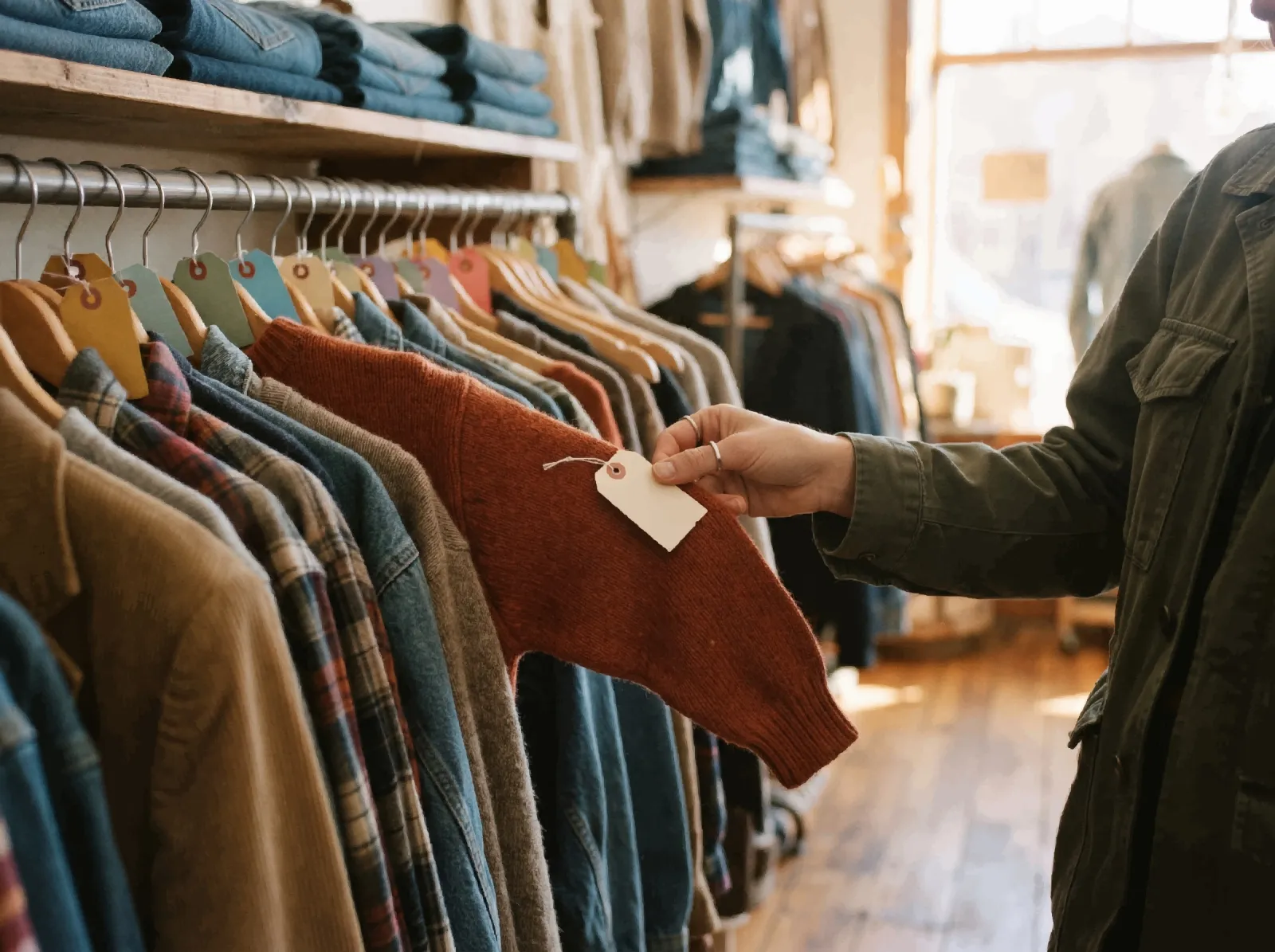
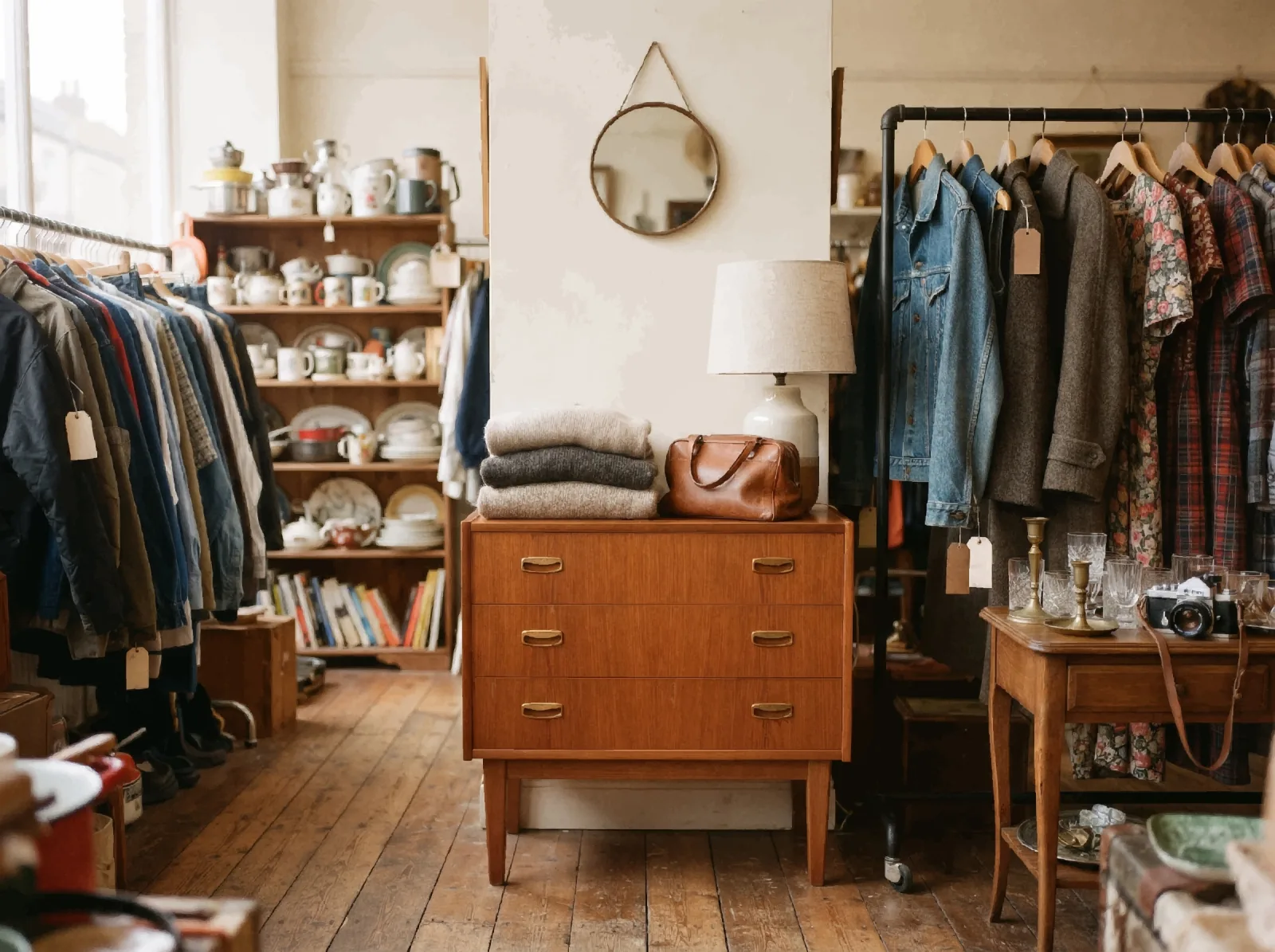
Search for second-hand stores near you and you'll get a mix of names: thrift stores, consignment shops, resale shops, vintage boutiques and antique malls. They all sell things that have had an owner before, and from the street they can look much the same. The real difference is where the goods come from. That one fact decides how prices are set, how much choice you'll get, how often the racks change and whether you can sell your own things there. Once you know which kind of store you're walking into, you know what to expect before you open the door.
The Short Answer: Who Owned It Before the Store?
Every second-hand store gets its stock in one of three ways, and the type of store follows from it:
- Donated: People give their things away. This is a thrift store, usually run by a charity, church or other nonprofit.
- Sold on someone's behalf: The owner leaves the item with the store and gets paid when it sells. This is a consignment shop.
- Bought outright: The store pays for the item up front, in cash or store credit, and owns it from then on. This is most resale shops, and many vintage and antique dealers too.
"Second-hand store" is the umbrella word for all of them. People also use "thrift" loosely for anywhere that sells used goods, and plenty of shops mix more than one model under one roof, so treat the name on the sign as a hint rather than a rule.
Thrift Stores: Donated Goods and the Lowest Prices
A thrift store sells what people donate. Most are run by nonprofits, from large charities with hundreds of locations to a single church shop open three days a week, and the money usually supports a cause such as job training, housing, animal rescue or a hospice. Some are run as for-profit businesses that buy donations from a charity partner, so it's worth checking who runs your local store if that matters to you.
- Prices: The lowest of any second-hand store. The store paid nothing for its stock, so it prices to sell quickly and make room for the next load of donations.
- Choice: Wide and unpredictable. You'll find everything from kitchenware and books to clothing and furniture, sorted by type and size more than by brand or quality.
- How often it changes: Constantly. Many larger stores put out new items every day, which is why regular shoppers come back often.
- Discounts: Many thrift stores run color tag sales, half-price days or senior and student days. Our guide to thrift store sale days and color tags explains how they work.
Thrift stores reward patience. You'll dig through more to find what you want, but this is where the biggest gap between the tag and the real value turns up. If you want to know which finds are worth a second look, see how to tell if a thrift store find is worth something.
Consignment Shops: Selling for Someone Else
A consignment shop doesn't own most of what it sells. You bring in your clothing, furniture or decor, the shop prices it and puts it out, and when it sells you get a share of the price. Until then it's still yours.
- The split: It varies by store and by item, but many shops give the owner somewhere between 40 and 60 percent of the selling price. Some pay a larger share on higher-priced pieces.
- Time on the floor: Most agreements run for a set period, often 60 to 90 days. Prices may drop on a schedule during that time, and anything left at the end is returned to you, donated or kept by the shop, depending on the agreement.
- What they take: Consignment shops are choosy because their income depends on what sells. Expect them to turn down items that are stained, worn, out of season or simply not what their shoppers buy.
- Prices for shoppers: Higher than a thrift store, lower than new. You're paying for a cleaner, better-sorted store where most of the work of picking has been done for you.
Consignment is common for furniture, women's and children's clothing, designer bags and wedding dresses. If you're shopping for furniture, the checks in our guide to buying used furniture at a thrift store work just as well in a consignment shop.
Resale Shops: Bought Outright, Often by Category
A resale shop buys its stock from the public and pays you on the spot. You bring in a bag or a box, a buyer looks through it, and the shop offers cash for what it wants. Many offer more if you take store credit instead. Whatever they don't buy goes home with you.
- What they pay: Less than a consignment shop would, because the store takes the risk that an item won't sell. Offers vary a lot by store and by what's in demand, and many shops are open about paying only a fraction of what they'll sell it for.
- Focus: Many resale shops stick to one category, such as teen and young adult clothing, children's clothes and gear, sports equipment, books, music or furniture. Some are local chains or franchises that buy by brand and season.
- Prices for shoppers: Usually between a thrift store and a consignment shop, with more consistent sizing, brands and condition than a thrift store.
- The name: "Resale" is used loosely. Some charity thrift stores call themselves resale shops, and some resale shops take donations too. Ask how the store gets its stock if you want to know.
Resale shops suit people who want money now and don't mind a lower price for it, and shoppers who want a specific size or brand without digging through everything.
Vintage Stores: Picked for Age and Style
A vintage store sells older clothing, furniture and decor chosen for its era and look. "Vintage" usually means something at least 20 years old, though there's no fixed rule, and many shops focus on a few decades they know well.
- Where the stock comes from: Vintage sellers buy from estate sales, auctions, private sellers, other dealers and, often, thrift stores. Some take consignment too.
- Prices: Set piece by piece and usually the highest of the second-hand stores covered here, apart from antiques. You're paying for the hunting, cleaning, repairing and sorting the seller has already done.
- Choice: Small and carefully picked. Expect racks sorted by decade or style rather than by size, and staff who know the history of what they sell.
Vintage stores are worth a visit when you want a particular look and don't have the time to find it yourself. Thrift stores are where you'll find the same kind of piece for less, if you're willing to look for it.
Antique Stores and Antique Malls
Antique stores sell older furniture, glass, china, silver, tools and collectibles, generally pieces from well before the middle of the last century, priced for their age, maker and condition. An antique mall is a large building split into booths, each rented by a different dealer, with one checkout at the front.
- Prices: Researched and often firm, though many dealers will discuss a price, especially on larger pieces or if you buy several.
- Choice: Deep in older and collectible pieces, thin on everyday basics.
- Overlap: Many small shops sell a mix of antiques, vintage and thrift-priced goods, and plenty of thrift stores keep a case for older finds near the register.
If you like older pieces, you can browse antique and thrift stores near you to see what shops in your area carry.
Which Kind of Store Should You Shop?
Each type of store suits a different trip. Here's a quick way to choose:
- Lowest price, and you enjoy the hunt: A thrift store. Go often, and go on sale days.
- Furniture or a nice outfit without the digging: A consignment shop.
- Kids' clothes, sports gear or a set size and brand: A resale shop that focuses on that category.
- A particular era or style: A vintage store.
- Collectibles, older furniture or a specific maker: An antique store or mall.
- Buying to resell: Thrift stores first, since the gap between price and value is widest there. Our guide to how thrift shoppers make money reselling finds covers the selling side.
Clearing Out Your Own Things: Donate, Consign or Sell?
The same three models work in reverse when you have things to get rid of. Which one fits depends on what you have and how much effort you want to put in.
Worth consigning or selling
- Clean, current and in great shape
- A known brand, maker or designer
- Furniture or decor in a style that sells locally
- You can wait weeks to be paid (consignment)
- You want cash today and accept less (resale)
Better to donate
- Everyday items worth only a few dollars each
- A mixed box of household goods
- Things a consignment or resale shop turned down
- You'd rather it support a local cause
- You want it gone this week
Only a gift to a nonprofit thrift store may count toward a tax deduction, so keep the receipt. Selling through a consignment or resale shop is a sale, not a donation. Policies on what's accepted, pickups and receipts vary by store and region, so check with your local store first. Our guide on how to donate to a thrift store covers what most stores take and what they don't.
How to Tell Which Kind a Store Is
Names don't always tell you, so look for these clues before or during a visit:
- A cause on the sign or website: Mentions of a charity, church, mission or "proceeds support" mean a thrift store.
- A drop-off door or donation bin: Thrift store. A buying counter or "we buy" sign means resale.
- Consignor numbers on tags: Codes or initials on the price tag, or a "consign with us" page, mean consignment.
- Booth numbers: Separate dealers' spaces with one checkout mean an antique mall.
- Racks sorted by decade: Usually a vintage store.
Ready to go looking? Find thrift stores near you, check their hours and see what they have for sale before you head out.