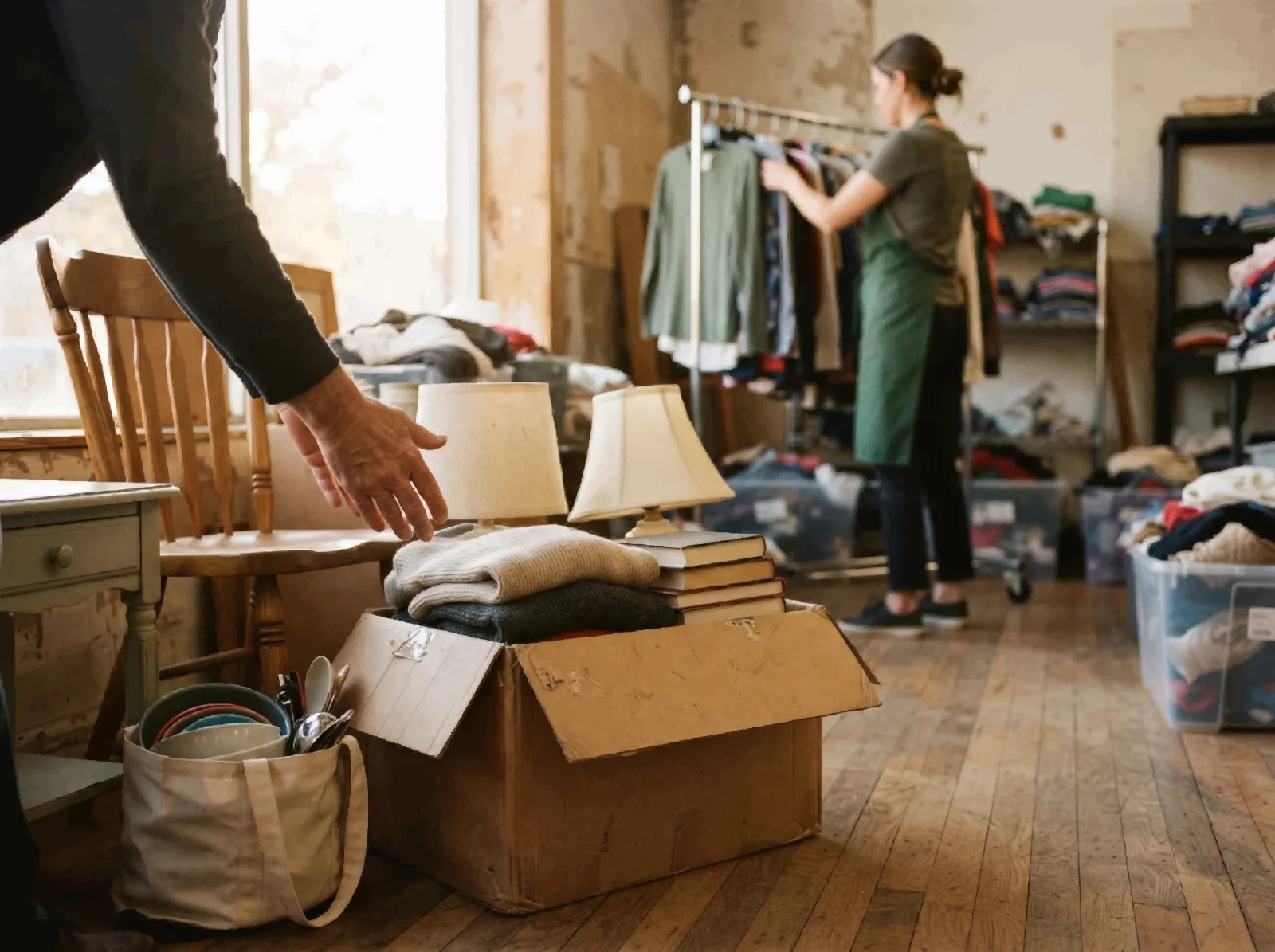
That closet you finally cleared out, the couch that no longer fits the living room, the box of kitchen gadgets you never use: all of it can have a second life at a local thrift store. Donating is easy once you know what stores want, what they turn away, and how to get the heavy stuff picked up without renting a truck. Here is how to do it right, so your donation actually ends up on the sales floor instead of in a dumpster behind the store.
Before You Donate
Thrift stores run on donations, but sorting them costs time and money. Items that can't be sold have to be thrown away, and many charities pay to haul that waste off. A few minutes of prep makes your donation far more useful.
- Clean it: Wash clothes and linens, wipe down furniture and appliances, and empty drawers and pockets.
- Test it: Plug in lamps and small appliances. If it doesn't work, most stores can't sell it.
- Keep sets together: Bag matching dishes, puzzle pieces, cords and remotes with the item they belong to.
- Check the donation hours: Many stores only accept donations during set hours, often at a separate door or drive-up lane. Items left outside after closing can get rained on, picked through or thrown out. Look up the store's hours before you go.
What Thrift Stores Usually Accept
Every store sets its own rules, but most gladly take clean, working items in these categories:
Usually welcome
- Clothing, shoes and accessories in wearable condition
- Purses, belts, jewelry and scarves
- Furniture without rips, stains or broken parts
- Dishes, cookware, glassware and small kitchen appliances
- Home decor, lamps, frames and mirrors
- Books, records, DVDs and board games
- Toys that are complete and clean
- Linens, blankets and curtains
- Hand tools and sporting goods
Often turned away
- Mattresses and box springs
- Cribs, car seats and other child safety gear
- Recalled products
- Stained, torn or broken items
- Large appliances and old tube TVs
- Paint, chemicals, fuel and propane tanks
- Weapons and ammunition
- Opened personal care items and medications
Why the "no" list? Some items carry safety or liability risks (car seats can be damaged in ways you can't see, and crib standards change), some are restricted by local health rules, and some simply cost the store more to dispose of than they'd ever sell for. If you're unsure about a specific item, call ahead. It saves you a wasted trip.
How to Get Furniture Picked Up for Free
Hauling a sofa or dresser across town is the biggest hurdle for most donors. The good news: many charities will come to you.
- Charity thrift stores with trucks: Larger nonprofit thrift stores, including many Habitat for Humanity ReStores, Salvation Army and St. Vincent de Paul locations, offer free furniture pickup in their service area.
- Veterans' charities: Several veterans' organizations run scheduled pickups for clothing and household goods in many regions.
- Local independent shops: Smaller thrift stores sometimes pick up quality furniture, especially pieces they know will sell. It never hurts to ask.
To book a pickup, call or use the charity's online form, then have photos ready. Most will want to see the item first. Expect to be asked about stains, pet hair, smoke exposure and damage, and expect the driver to inspect it at your door. Pickups are often scheduled a week or two out, so plan ahead if you're moving.
Donation Bins vs. Dropping Off at the Store
Donation bins in parking lots are convenient, but not all of them are what they appear to be. Some are run by charities, while others belong to for-profit companies that resell or export what's collected. Check the bin's label for the organization's name and look it up if you want your donation to support a specific cause.
Dropping off at a thrift store in person has a few advantages: staff can tell you on the spot whether they can use an item, you can ask for a receipt, and your donation goes straight to that store's shelves. Bins are best for bagged clothing and shoes. Anything fragile, bulky or valuable should go to the store.
Tax Receipts and Valuing Your Donation
Donations to nonprofit thrift stores run by registered charities may be tax-deductible if you itemize deductions. Ask for a donation receipt when you drop off. Most stores hand you a blank receipt with the charity's name and date, and you fill in what you gave.
You'll need to estimate the fair market value of your items, which is roughly what they'd sell for in a thrift store, not what you originally paid. Many charities publish value guides to help. Keep a simple list or photos of what you donated. Larger donations come with extra paperwork, so check current IRS guidance or ask a tax professional before you file.
Note that donations to for-profit resale shops and consignment stores are not tax-deductible.
Make Your Donation Count
The best donations are the things you'd be happy to find on a shelf yourself. Clean, working, complete items sell quickly and raise the most money for the store's cause. Donate seasonal clothing a little ahead of the season, and bring bigger loads early in the week when stores are less swamped from weekend drop-offs.
Not sure where to take your things? Search for thrift stores near you to see their hours, what they sell and how to reach them before you load up the car.