Every thrift shopper has picked something up and wondered whether it's worth more than the price on the tag. The honest answer is that most things aren't. Thrift stores sell everyday household goods, and the vast majority are worth about what the store is asking. But stores can't research every donation, and a few good pieces slip through to the regular shelves every week. You don't need to be an expert to spot them. A few minutes of checking the label, the material and the condition tells you most of what you need to know. Here is how to do it in the aisle and at home.
Start With the Label, Mark or Signature
The single best clue to value is who made it. Before you look at anything else, find out whether the piece tells you that.
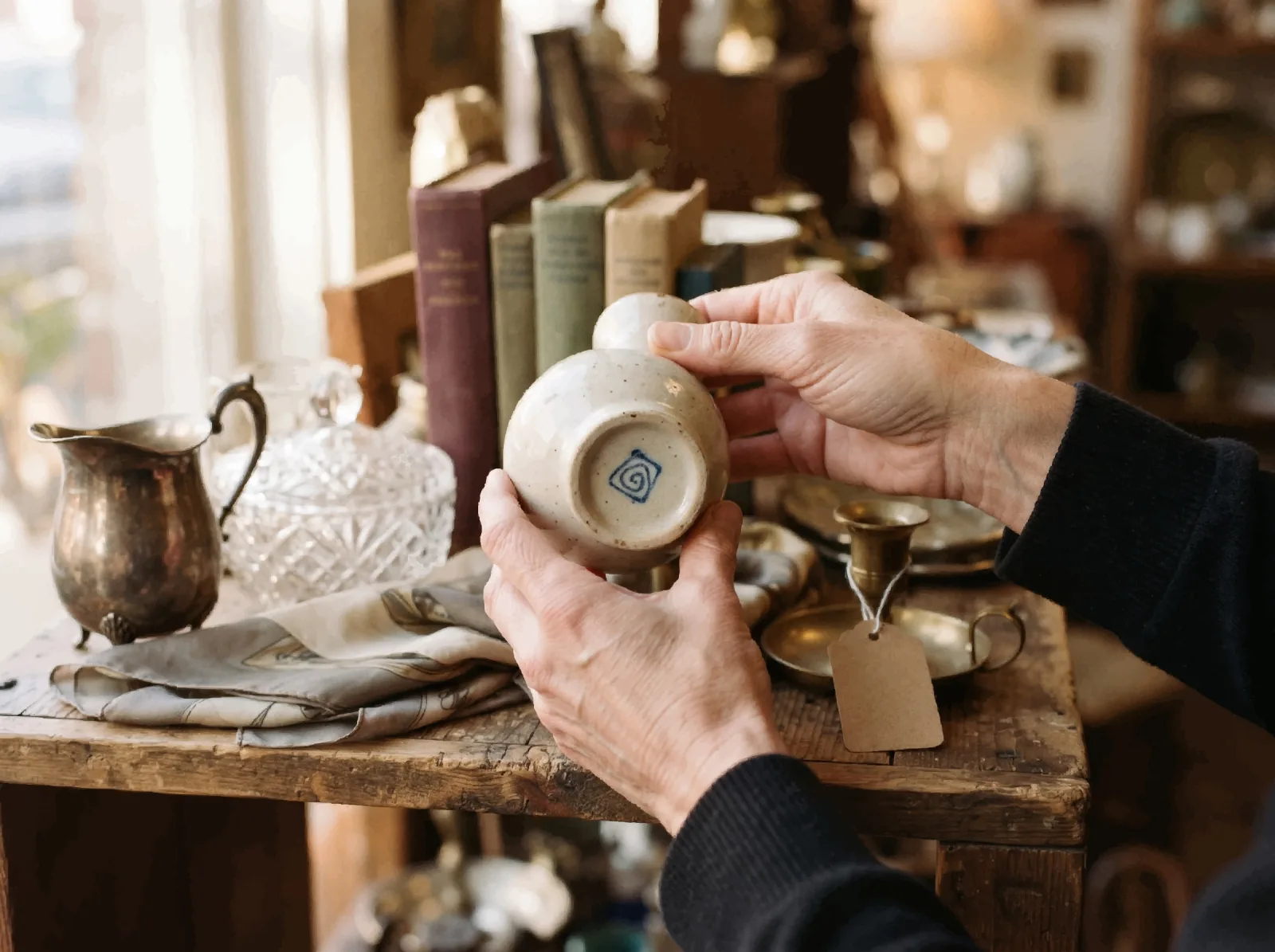
- Pottery, china and glass: Turn it over. Maker's marks are usually stamped, painted or pressed into the base. Note the name, any symbol, a pattern name and the country of origin. Pieces marked "Occupied Japan" were made between 1945 and 1952, which dates them straight away.
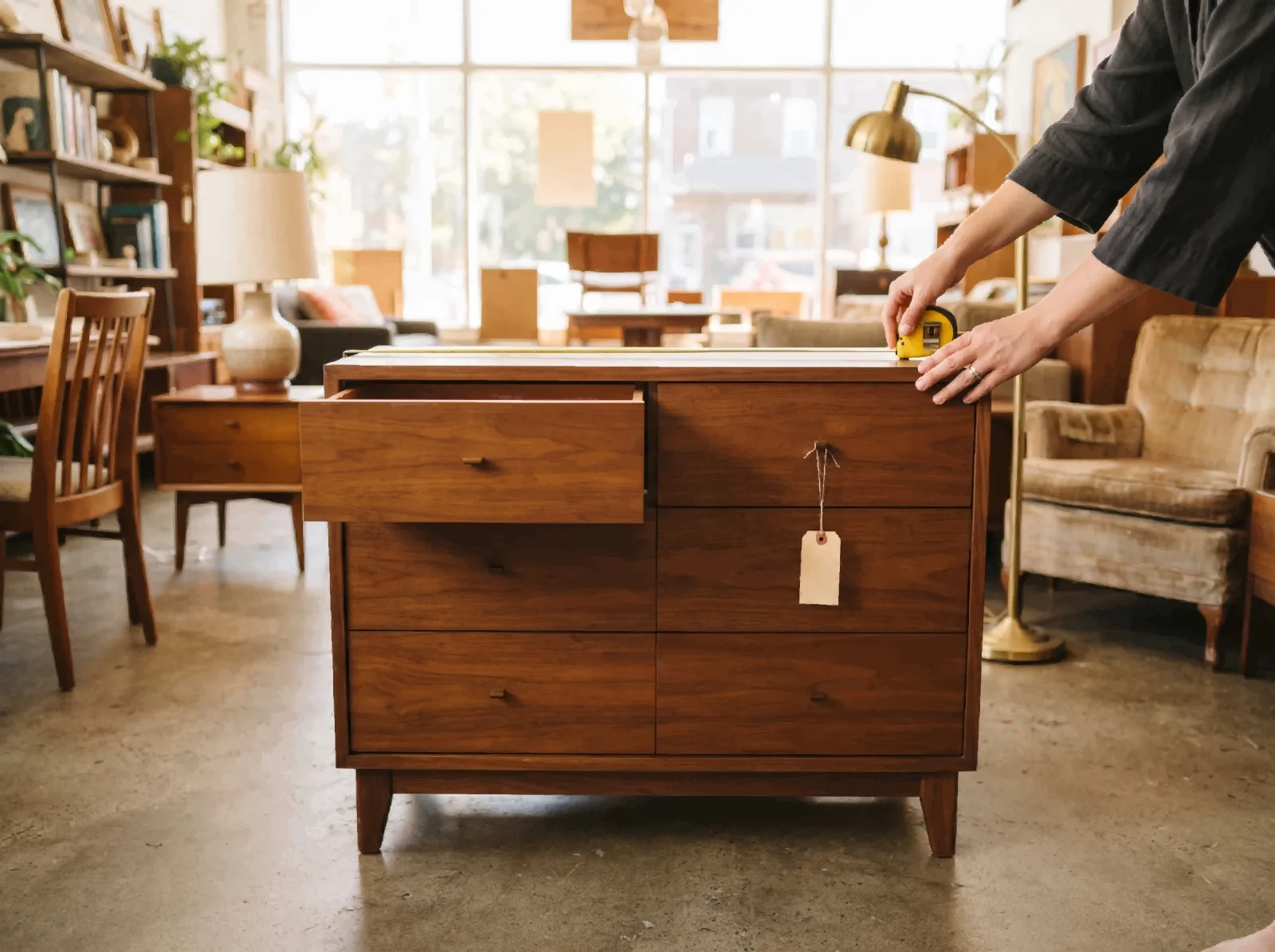
- Furniture: Look inside drawers, on the back panel and under the seat or top for a stamp, a paper label or a metal tag. Many good furniture makers marked their work.
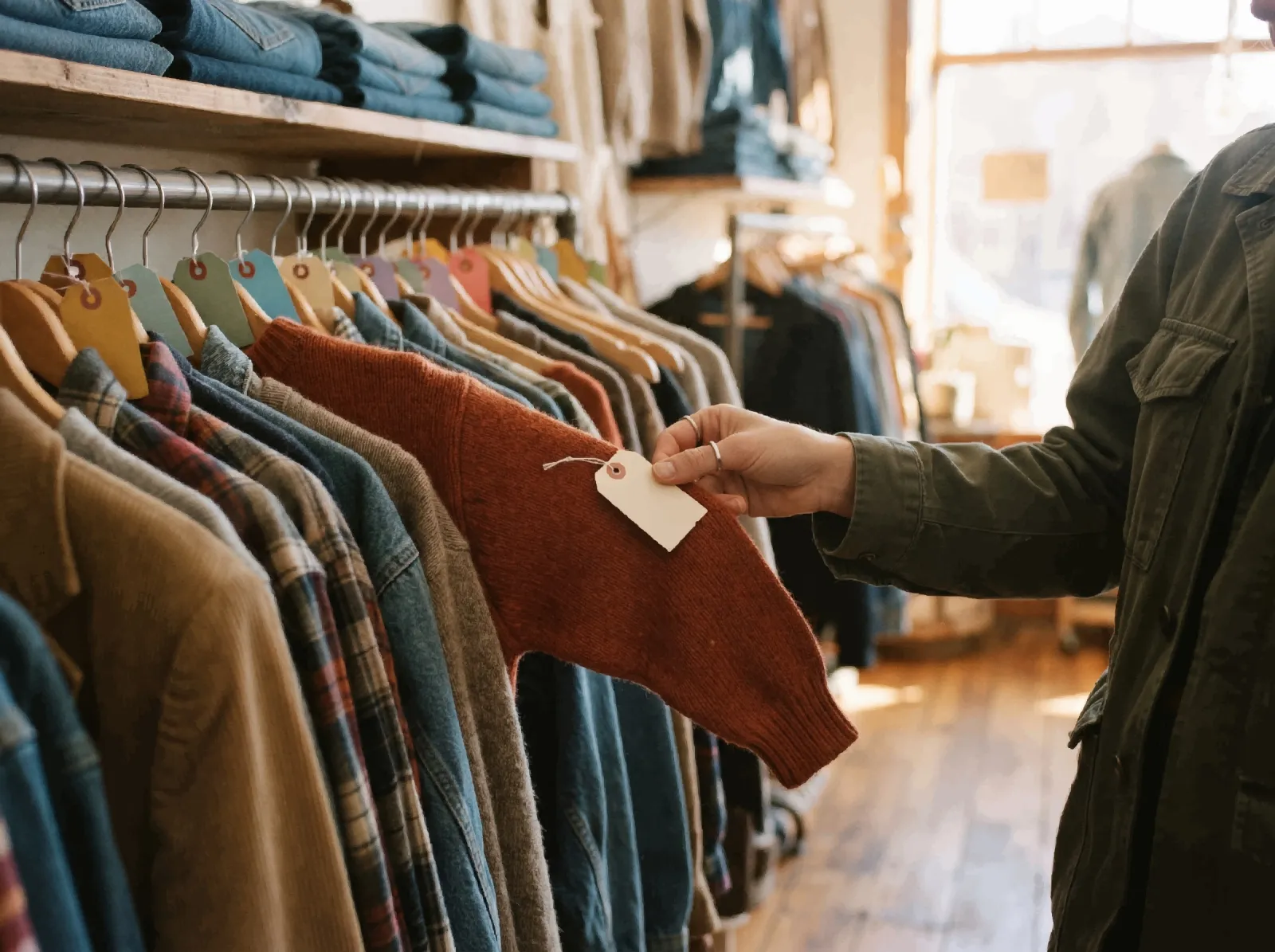
- Clothing and bags: Read the brand label and the small tags in the side seam. US clothing carries an RN number, which you can look up on the Federal Trade Commission's website to find the company that made it.
- Art and prints: Check the front corners for a signature, and the back for gallery labels, framer's stickers, dates or handwritten notes.
- Jewelry: Look on clasps, the inside of rings and the backs of pendants for tiny stamps. A loupe or your phone's camera zoom helps.
Take a clear photo of every mark, even ones you can't read yet. It's much easier to look up a mark at home than to remember what it looked like.
Check What It's Made Of
Material sets a floor under the value. A plain piece in a valuable material is often worth more than a decorative piece in a cheap one.
- Silver: Sterling is usually marked "Sterling" or "925". Marks like "EPNS", "silver plate" or "silverplate" mean a thin coating over another metal, which is worth much less.
- Gold: Solid gold is usually stamped with its karat, such as 10K, 14K or 18K, or a number like 417, 585 or 750. "GP", "GF" or "HGE" mean plated or filled, not solid.
- The magnet test: Gold and silver aren't magnetic. A small magnet on your keyring is a quick way to rule out a piece that sticks firmly, though passing the test doesn't prove it's real.
- Wood: Solid wood furniture is worth more than particleboard and can be refinished. Our guide to buying used furniture at a thrift store explains how to tell them apart.
- Natural fibers: Wool, cashmere, silk, linen and leather usually sell for more than synthetics, and the fiber content is printed on the care label.
- Cast iron: Older cast iron pans are often lighter, with a smoother cooking surface, than many newer ones. Look for a maker's name or a number on the bottom.
Clues to Age and Quality
Age alone doesn't make something valuable, but quality construction and signs of an older piece often go together. These details are worth a closer look:
- Handwork: Dovetail joints on drawers, hand-stitched hems and buttonholes, and hand-painted decoration with small differences from one side to the other.
- Labels that show age: Clothing without a care label may well date from before the early 1970s, when US care labels became required. Older brand labels also tend to be woven rather than printed.
- Hardware: Metal zippers, heavy brass hinges and slotted screws are common on older pieces. Plastic zippers and Phillips screws don't rule out age, but they're worth noting.
- Weight and feel: Better glass, china and metal often feel heavier and more solid than they look. Thin, light and flimsy usually means mass-made.
- Wear in the right places: Real age shows where hands and feet touched a piece, like the edges of a tabletop or the base of a vase. Even wear all over can be a sign of distressing done on purpose.
Uranium glass, a pale green or yellow glass popular in the early and middle 1900s, glows bright green under a small UV flashlight. Some collectors carry one for that reason, and it's a fun way to pick out an older piece on a crowded glassware shelf.
Things That Often Sell for More Than the Tag
Value changes with trends, and prices vary a lot by condition and by where you live. Still, some kinds of things are worth a second look on almost every trip:
- Vintage kitchenware: Patterned glass bakeware and mixing bowls, enamel cookware and older cast iron pans.
- Mid-century furniture and lighting: Simple wood pieces from the 1950s to the 1970s, especially with a maker's label.
- Vintage clothing: Older denim, leather jackets, band and event t-shirts, wool coats and well-known designer labels.
- Records, cameras and electronics: Vinyl in good shape, film cameras and lenses, and older audio equipment that still works.
- Toys and games: Older toys, especially complete and in the original box.
- Sterling, gold and costume jewelry: Jewelry with a maker's mark or a metal stamp, often kept in a locked case near the register.
- Art, pottery and handmade pieces: Signed work, studio pottery with a mark on the base and well-made handcrafts.
Antique and resale shops price these things with much more care, so ordinary thrift stores are where the gap between tag and value is biggest. If you enjoy the hunt for older pieces, you can also browse thrift and antique stores near you to see what local shops carry.
Look Up Prices the Right Way
Once you have a maker and a description, a quick search tells you whether you've found something special. How you search matters as much as what you search for.
- Search plainly: Use the maker, the pattern or model name and a few plain words, like a color, size or type. Leave out words like "rare" or "vintage", which mostly bring up listings that use them as a sales pitch.
- Use sold prices: On sites like eBay, filter to sold or completed listings. Sold prices show what someone actually paid. Asking prices only show what sellers hope to get, and many of those items sit unsold for months.
- Match the condition: Compare your item with ones in the same condition. A chipped bowl won't sell for the price of a perfect one.
- Count the listings: If hundreds of the same item are for sale and only a few have sold, it's common and hard to sell, whatever the price.
- Check more than one source: Collector forums, auction results and resale sites can show different prices. Look for a range, not one number.
When you're standing in the aisle, a photo search is often the quickest start. The Value Scanner in the ThriftyPickers app reads a photo of the item and shows what similar used items are being offered for online, which helps you decide whether it's worth a closer look before you get to the register.
Condition Decides Most of the Value
Two of the same item can be worth very different amounts. Check these before you get excited about a price you found online:
- Chips, cracks and repairs: Run a finger around rims and edges, and hold glass and china up to the light. Glued repairs and hairline cracks lower the value a lot.
- Missing parts: Lids, stoppers, shades, original boxes, manuals and the full set of pieces all matter. A complete set is usually worth more than its pieces sold one by one.
- Stains, holes and odors: On clothing and textiles, check the underarms, collar and cuffs. Smoke and mildew smells are hard to remove.
- Does it work? Most stores have an outlet near electronics for testing, so ask. Items sold as not working are usually worth a fraction of working ones.
- Refinishing: On antiques and older furniture, an original finish is usually worth more than a new one, even a nice one. Think before you sand.
Signs to Look For and Signs to Be Careful
Good signs
- A clear maker's mark, label or signature
- Metal stamps like "925", "Sterling" or "14K"
- Solid wood, natural fibers or heavy glass
- Handwork and even, natural wear
- Complete with all its parts, lid or box
- Sold prices well above the tag in your search
Be careful
- A big brand name on something that feels cheap
- Logos with odd spelling, uneven stitching or poor print
- "Antique" looks with modern screws, glue or staples
- Wear that looks the same all over
- Chips, cracks or missing pieces
- Only asking prices online, with few or no sales
Reproductions and fakes turn up in thrift stores just like real pieces do. Designer bags, sports jerseys, popular glassware and well-known pottery are copied the most. When something looks too good for the price, check the details twice: the stitching, the font on the label, the weight and the quality of the mark.
When to Get an Expert Opinion
For most finds, your own research is enough. It's worth asking an expert when your search points to a real value, usually a few hundred dollars or more, or when the item is hard to identify, such as fine jewelry, paintings, older antiques or anything with a signature you can't read.
- Local antique dealers: Many will tell you what something is, though remember that a dealer may also want to buy it.
- Auction houses: Many regional auction houses look at photos for free if they might sell the piece for you.
- Certified appraisers: They charge a fee, often by the hour or by the item, and give a written value you can use for insurance. Ask about the cost before you hand anything over.
- Collector groups: Online forums and clubs for a particular maker or type of item are often generous with what they know.
If you plan to resell what you find, our guide to how thrift shoppers make money reselling finds covers the selling side. To pay less for the finds themselves, see thrift store sale days and color tags. And if a search turns up nothing special, that's fine too: a well-made thing you'll use is still a good find. Things you don't keep can go back to the shelf for the next person, and our guide on how to donate to a thrift store explains how.
Ready to go looking? Find thrift stores near you, check their hours and see what they have for sale before you head out.