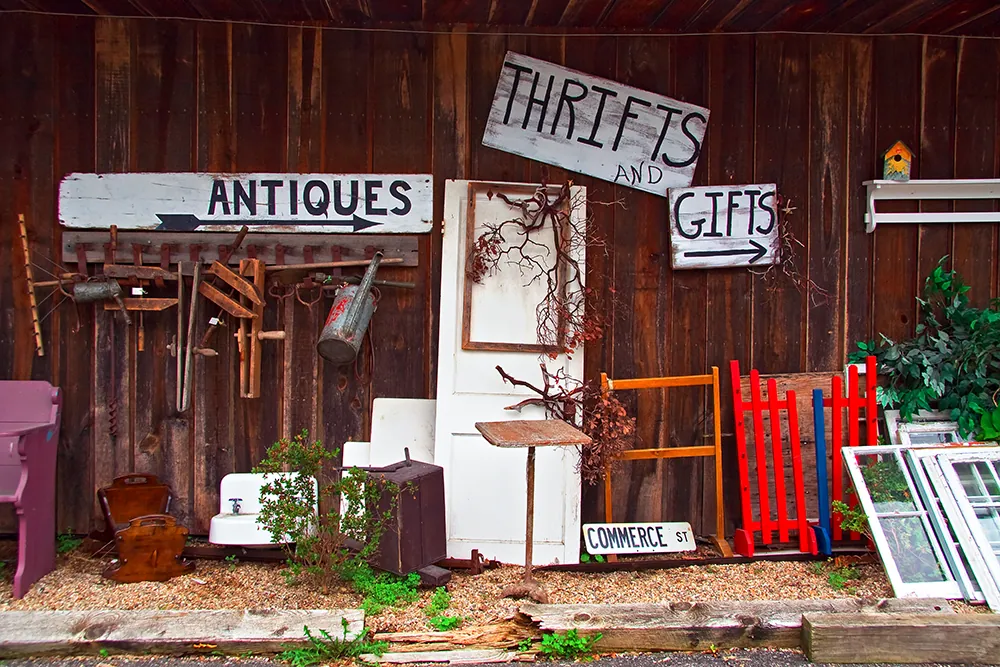
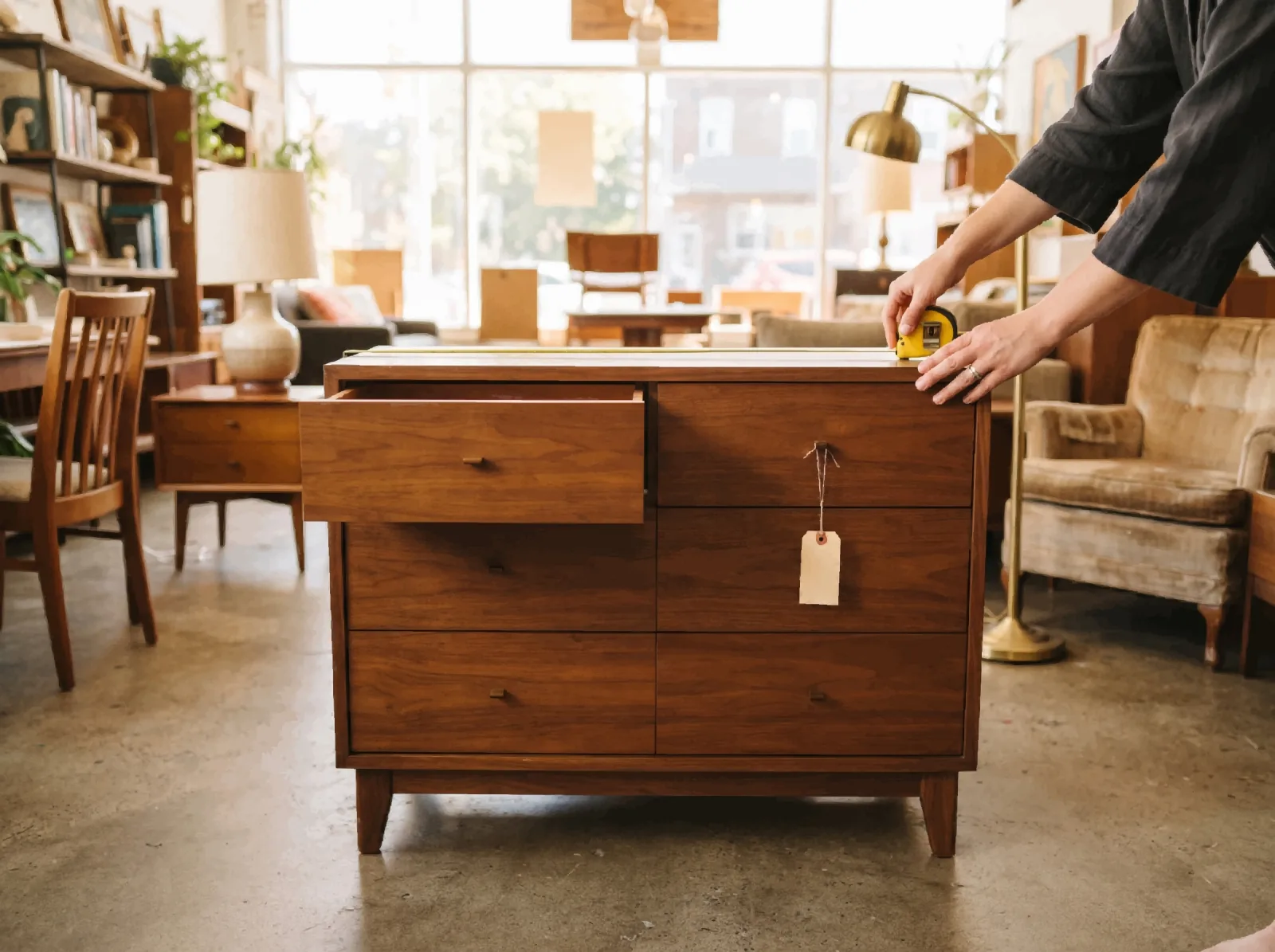
A thrift store is one of the best places to buy furniture. A solid wood dresser, a sturdy dining table or a set of chairs can cost a fraction of the price of something new, and it is often better made than what you would find flat-packed in a box. The catch is that furniture is a bigger purchase than a sweater: it has to fit through your door, survive the trip home and not bring anything unwanted with it. A few minutes of checking in the store is what separates a great find from a costly mistake. Here is what to look at before you pay.
Where to Find Thrift Store Furniture
Not every thrift store carries much furniture. Small shops often stick to clothing and housewares because they don't have the floor space. These are the places most likely to have a good selection:
- Habitat for Humanity ReStores: Furniture, cabinets, doors, lighting and appliances, much of it donated during home renovations.
- Salvation Army Family Stores and St. Vincent de Paul: Many locations have a furniture section, and some run free pickup for donations, so stock turns over quickly.
- Large independent and charity thrift stores: Stores with a warehouse or back room often take in whole households at a time.
- Furniture-focused thrift and resale shops: Some stores specialize in furniture and home goods. You can browse thrift stores that sell furniture to find the ones near you.
Furniture moves fast. A good piece at a fair price can be gone the same day, so if you see something you love, it's usually better to decide then than to come back tomorrow. Some stores on ThriftStores.net post their items for sale online, which lets you see a piece before you drive over.
Measure Before You Go
The most common thrift furniture mistake has nothing to do with quality. It's buying something that doesn't fit. Before you leave the house:
- Measure the space: Width, depth and height of the spot where the piece will go, including any window sills, outlets or radiators in the way.
- Measure the path: Front door, hallways, stair turns and the doorway into the room. A sofa that fits the room can still get stuck on the stairs.
- Measure your vehicle: Know the cargo space with the seats folded, or plan for help with a bigger vehicle.
- Bring a tape measure: Store tags rarely list sizes, and eyeballing a dresser in a big warehouse is harder than it sounds.
Save your measurements in your phone so they're with you on every trip. Thrift finds are often unplanned, and it helps to know straight away whether a piece can work.
Check for Bed Bugs and Pests First
This is the one check you should never skip, especially on anything upholstered. Most thrift stores inspect donations, but a quick look of your own takes a minute and can save you a very expensive problem. Use your phone's flashlight and look closely at:
- Seams, piping and tufting: On sofas, chairs and headboards, check along every seam and under the cushions.
- Joints and cracks: On wood pieces, look in corners, drawer joints, screw holes and the underside.
- What to look for: Small dark spots or smears, tiny pale eggs, shed skins, or live bugs about the size of an apple seed.
- Other pests: Fine sawdust or small round holes in wood can mean wood-boring insects. Droppings in drawers mean mice.
If you see any of these signs, walk away. Solid wood, metal and plastic pieces are lower risk than upholstered ones, because there are fewer places to hide and they are easy to clean. That's one reason many shoppers buy wood tables and dressers secondhand but are pickier about sofas and armchairs.
Solid Wood, Veneer or Particleboard?
Knowing what a piece is made of tells you how long it will last, whether it can be refinished, and whether the price is fair.
- Solid wood: The grain runs through the whole board. Look at an unfinished edge, the back panel or the underside of a drawer, where the grain on the edge matches the grain on the face. Solid wood can be sanded and refinished many times.
- Veneer: A thin layer of real wood glued over another material. Good veneer furniture can be very well made and is common on older pieces, but you can only sand it lightly. Check for peeling or bubbling at the edges.
- Particleboard and MDF: Pressed wood chips or fibers, usually covered in a laminate or paper wood-look finish. Look for a pattern that repeats exactly and edges covered with a thin strip. It's fine for light use, but it doesn't like being moved, takes water damage badly and can't be refinished.
A few other signs of quality: drawers joined with interlocking dovetail joints rather than staples and glue, drawer bottoms that sit in a groove, and a back panel that is screwed in rather than stapled cardboard. Weight alone is a poor guide, since particleboard can be surprisingly heavy.
Test It Like You Already Own It
Store staff won't mind you giving furniture a proper once-over. It's much easier to spot a problem on the floor than once it's in your living room.
- Wobble test: Push gently on the top of tables, chairs and dressers from each side. A small wobble can often be fixed by tightening screws. A frame that shifts and creaks at the joints needs regluing or more.
- Sit on it: Chairs and sofas should feel solid, with no sagging, cracking sounds or springs you can feel through the cushion.
- Open everything: Pull every drawer all the way out and push it back. It should run smoothly and not drop when fully open. Open and close doors and check the hinges.
- Smell it: Smoke, mildew and pet odors soak into upholstery and unfinished wood and are hard to remove. Put your nose inside a drawer, too.
- Look for water damage: Dark rings, warped tops, lifting veneer or swollen, crumbly edges on particleboard.
- Check the hardware: Missing knobs and pulls are easy to replace, but odd sizes can be hard to match, so count the screw holes.
Safety Checks for Kids' Furniture and Older Pieces
Some used furniture needs more care than a quick look, especially anything for children.
- Cribs: In the US, cribs made before the federal crib safety standards took effect in June 2011 shouldn't be used, and drop-side cribs are no longer sold new. Many thrift stores won't accept cribs at all for this reason. If you find one, check the date on its label and look up the model for recalls.
- Recalls: For high chairs, play yards, dressers and other children's furniture, search the brand and model on the US Consumer Product Safety Commission's SaferProducts.gov site before you buy.
- Tip-overs: Dressers and bookcases can tip if a child climbs them. Anchor any tall piece to the wall with an anti-tip kit, which costs a few dollars at a hardware store.
- Old paint: Painted furniture from before 1978 may have lead paint. Avoid sanding it unless you've tested it with a home lead test kit, and be careful with pieces that are chipping, especially in a child's room.
What to Buy and What to Skip
Usually a good buy
- Solid wood dressers, nightstands and bookcases
- Dining tables and chairs with tight joints
- Metal bed frames, shelving and patio furniture
- Wood chairs with a seat you can recover yourself
- Dated finishes on a sound frame (an easy paint project)
- Lamps, mirrors and side tables
Usually worth skipping
- Upholstery with stains, odors or any sign of pests
- Particleboard with swollen or crumbling edges
- Cracked frames or split legs on chairs and sofas
- Recliners and sleeper sofas with stiff or jammed mechanisms
- Older cribs and recalled children's furniture
- Anything you'd need to rebuild just to use
A piece with a tired finish but a sturdy build is often the best deal in the store, because most shoppers walk past it. Paint, new hardware or a recovered seat can change it completely. Our guide to thrift store makeovers has ideas to get you started. If you're buying pieces to fix up and sell, the same checks apply, and there's more on that in how thrift shoppers make money reselling finds.
Price, Holds and Getting It Home
Thrift furniture prices vary a lot by store and city. A solid wood dresser that would cost several hundred dollars new often sells for well under half that secondhand, and simple side tables and chairs can cost less than a takeout dinner. A few things help you pay less and avoid surprises:
- Ask about markdowns: Big chain stores usually have fixed prices, but many stores reduce furniture that hasn't sold after a few weeks. Smaller independent shops are sometimes open to an offer, especially on a piece that's been sitting.
- Check the sale rules: Furniture is sometimes left out of color tag and half-price sales. Our guide to thrift store sale days explains how those sales work.
- Ask about holds: Many stores will hold a paid piece for a day or two while you arrange a vehicle, but some want it gone the same day. Ask before you pay.
- Ask about delivery: Some larger thrift stores deliver for a fee. It's often cheaper than renting a truck for one piece.
- Expect all sales to be final: Most thrift stores don't take returns, which is why the checks above matter.
- Come prepared: Bring moving blankets or old towels, straps or rope, and a friend. Take drawers out of dressers before lifting them so they don't slide out and break.
Once it's home, give the piece a clean before it goes into use. Wipe wood with mild soap and water, let drawers air out in the sun if they smell musty, and vacuum or steam clean upholstered pieces. If your new find is replacing something, many thrift stores will pick up your old furniture for free. Our guide on how to donate to a thrift store covers what they accept. For more general shopping advice, see our quick tips for buying secondhand.
Ready to start looking? Find thrift stores near you and check their hours before you go. In the ThriftyPickers app, saving a Premier store means you can get an alert when it posts new items for sale, which helps when good furniture sells fast.